
Control cabinets for automation systems

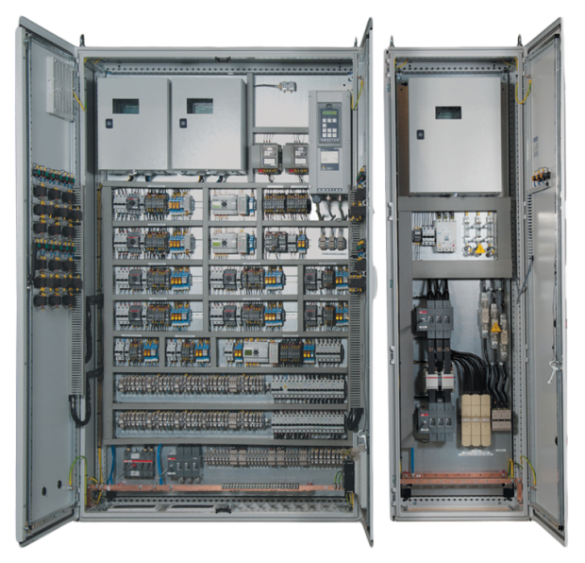
Control cabinets and automation equipment based on automation systems are a set of cabinets that control a complete technological process or a separate part of it, with the ability to integrate into existing APCS systems.
Automation systems can be either local, to control a separate system, or top-level ones that combine several processes or circuits.
Power and distribution cabinets transmit data on the state of the executive systems and receive control commands from the top-level controller and/or process operator’s workstation.
Cabinets and automation systems can be used in automation of cycles and continuous processes, as well as separate production steps.
Application Scope
- Automation of workflow in industry (control and regulation of process parameters, process supervision, unit/installation automation).
- Automated water supply and drainage (water intakes, lift pumping stations, wastewater pumping and treatment stations, sewage pumping stations).
- Automated heat supply systems (TPP, boiler houses, heating points).
- Automated gas supply systems (gas control points, gas control stations, gas control installations).
- Smart-houses (heating, ventilation and air conditioning, water supply and sewerage, gas supply, power supply, fire extinguishing and smoke removal systems).
Main Functions
• Increased output.
• More efficient production.
• Improved product quality.
• Increased cost- efficiency, reduced raw material consumption.
• Improved production safety.
• Reduced human factor interference.
• No presence of people in potentially hazardous areas of production.
• Improved quality of regulation.
• High equipment availability.
• Better environmental friendliness.
• Reduced number of service personnel.
• Improveв process operator labor ergonomics. Reduced production costs and service costs.
• Automatic supply and regulation of heat and cold supply systems, air conditioning systems, water treatment systems; prevention of emergencies.
• Longer service intervals.
• Extended life of the equipment.
• Automated water supply.